Trend articles are usually written by people selling this year’s stock. We’d rather tell you what’s actually being chosen — what Edinburgh homeowners are ordering, what’s arriving in our vans, and which trends we think you’ll still be glad of in ten years.
Because a floor isn’t a cushion. You can’t change it next season. A trend is only worth following if it will age well.
Here’s what 2026 looks like from our side of the toolbox.
1. Warm tones are back — grey is over
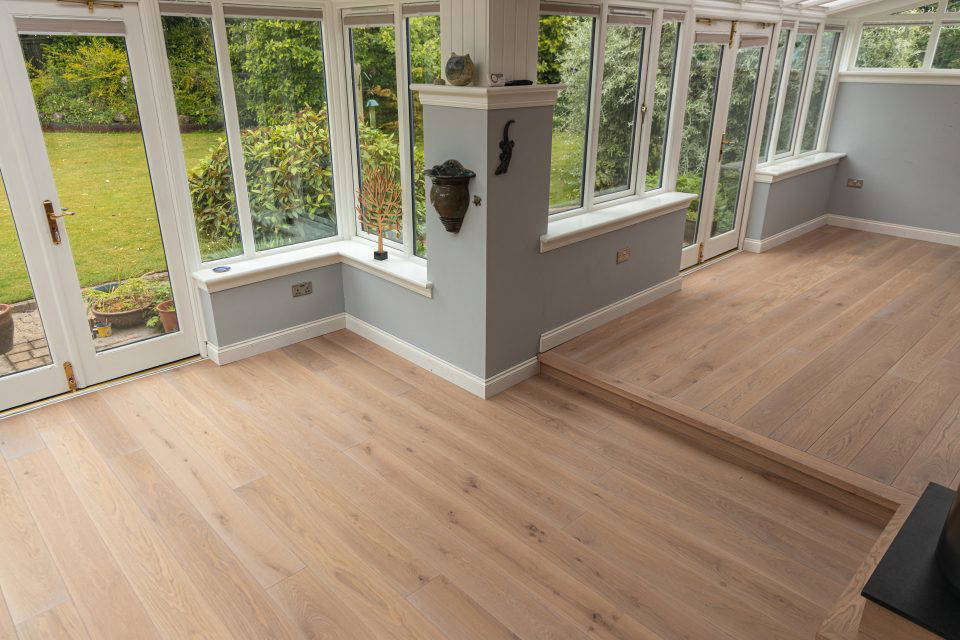
The biggest shift of the last two years: after a decade of cool greys and ashy tones, warmth is back. Honey, caramel, chestnut — natural oak tones with life in them.
Almost every sample we hand over now comes back with the warm option chosen, and the grey boards that dominated 2015–2022 are quietly disappearing from ranges.
Our take: this isn’t really a trend, it’s a correction. Grey floors were fashion. Warm oak is what wood actually looks like, which is why it never dated before and won’t again.
If you’re choosing now, choose warm. It will also make your home feel noticeably cosier through a Scottish winter. If you are weighing tones, our note on smoked oak versus natural oak is a good place to start.
2. Matte finishes: the end of shine
Gloss is gone. The finish everyone wants in 2026 is matte to ultra-matte — surfaces that look freshly sanded, letting the timber’s texture do the talking. Brushed boards, where the grain is physically textured, complete the look.
This trend has a practical bonus we love: matte, brushed, natural-grade floors hide scratches, dust and paw prints far better than smooth gloss ever did.
Fashion and function agreeing with each other is rare. Take the win.
3. Wide planks and long boards
Standard boards keep getting wider — 190mm to 220mm is the new normal for engineered oak, with 240mm+ appearing in bigger rooms.
Fewer joints means calmer floors, and in the generous rooms of Edinburgh’s period flats, wide boards look fantastic.
One honest caveat from the fitting side: the wider the board, the flatter the subfloor needs to be, and the more any movement shows. Wide planks are a do-it-properly product, not a bargain-bin one.
4. Pattern is staying: herringbone, chevron and friends
We’ve written a whole post on the herringbone boom, so here’s the short version: still the most requested look in our diary, still growing, and now spreading into chevron, basket weave and bordered designs.
What’s changed for 2026 is accessibility. Convincing herringbone now exists at every price point, from laminate to solid parquet.
If you’ve been waiting to see whether the pattern would pass — it hasn’t, and it won’t.
5. One floor, whole flat
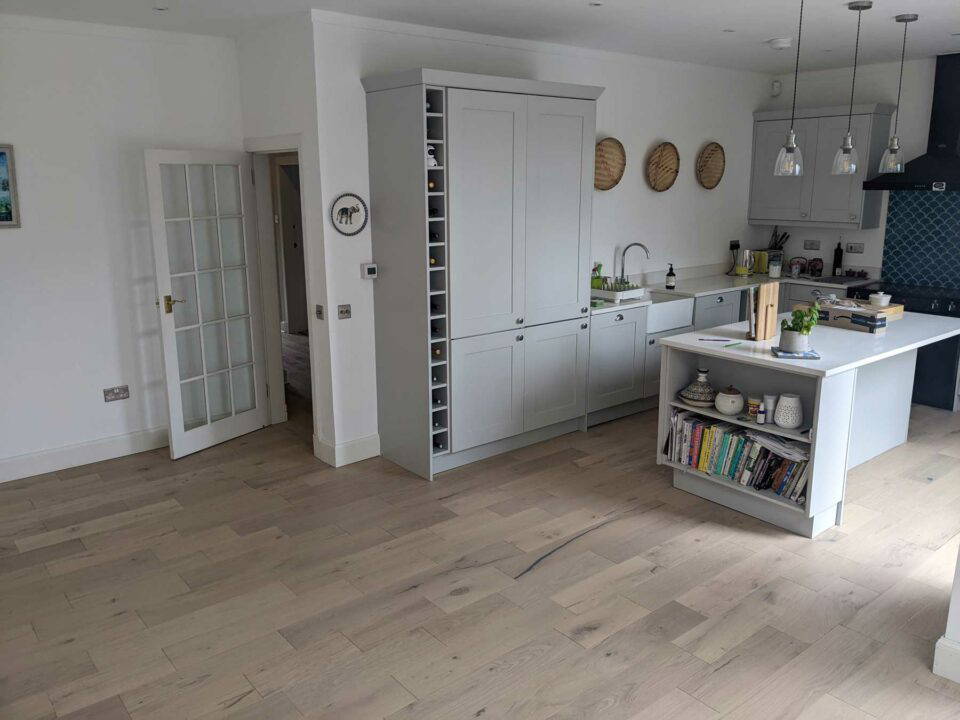
The strongest layout trend: a single flooring choice running continuously through hall, living space and kitchen, without thresholds chopping the flat into boxes.
It makes small flats feel bigger and big rooms feel calmer. Modern waterproof materials are what unlocked it — a floor that couldn’t handle the kitchen used to force a junction; LVT and water-resistant ranges don’t.
Where a real-wood lover wants continuity, we’ll often match an engineered oak with its closest LVT sibling for the wet rooms, and make the transition all but disappear.
6. Sustainability: real, and worth checking
More customers ask about eco-credentials every year, and rightly so. But this corner of the industry has its share of greenwash. Three checks cut through it.
Certification: FSC or PEFC on timber means the forest is genuinely managed responsibly.
Longevity: the greenest floor is the one you never replace. A 25-year engineered floor beats a 12-year anything.
And honesty about vinyl: LVT is a plastic product. The responsible ranges now carry recycled content and take-back schemes, and quality that lasts is still the best environmental argument.
Wood remains the most sustainable choice by a distance. It’s renewable, it stores carbon, and it’s the only floor whose life can be extended by sanding.
7. What we’d skip
- Ultra-pale Scandi blond everywhere: beautiful in photos, unforgiving in a Scottish climate of muddy footwear, and already starting to date.
- High-gloss anything: shows every mark, looks dated, and refinishing it is a bigger job.
- Fashion-first colours (deep espresso, red-toned exotics, grey): if a tone has a ‘moment’, it has an expiry date. The floor outlives the moment.
- Chasing trends in the wrong house: a Victorian tenement suits timber tones and pattern; an ultra-modern silver oak fights the building. The house gets a vote.
The only trend that never misses
Quality fitting. A mid-range board, properly prepped and fitted, beats a premium board laid badly — every time, in every year, in every trend cycle.
Choosing the right product and installing it properly makes all the difference. If you’re planning a floor for 2026, spend your style energy on tone and pattern, and your budget energy on preparation and fitting.
Want to see how these trends look in real Edinburgh homes rather than showroom photos? Browse our Projects page, then send us your room and your ideas for a free, no-obligation quote — call 0131 285 6435 or use the form on this site.
Related questions
See our flooring installation service or get an estimate.
We install floors across Edinburgh, East Lothian, Midlothian and West Lothian.